Hey Duggee: We Love Animals
BBC Studios Distribution Ltd.Educational
4.12.00 Reviews
- Version
- 1.5.2
- Installs
- 10.00K
- Age Rating
- Everyone
Screenshots
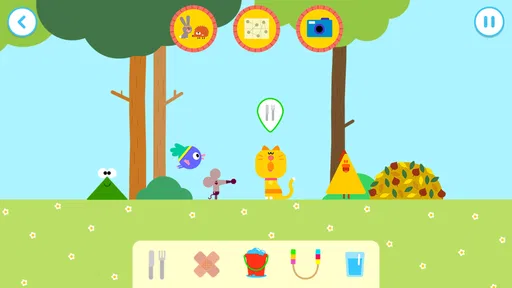
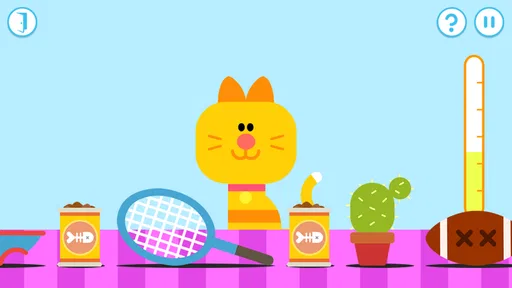
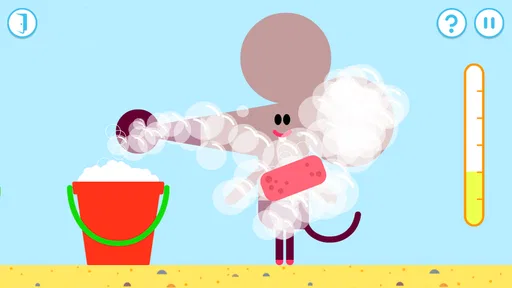
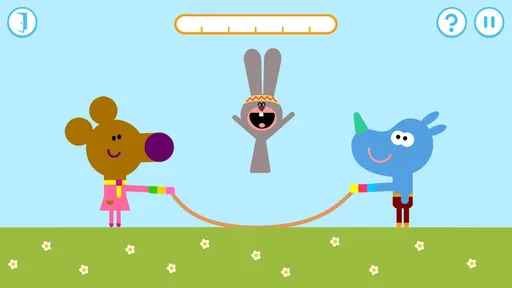
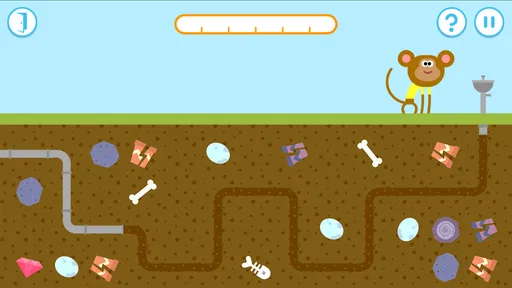
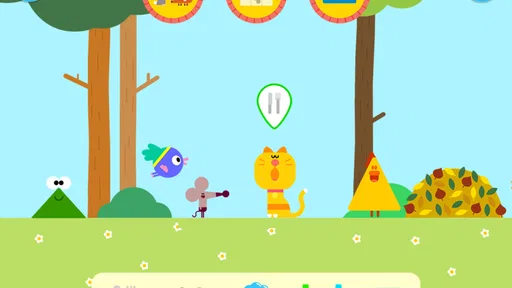
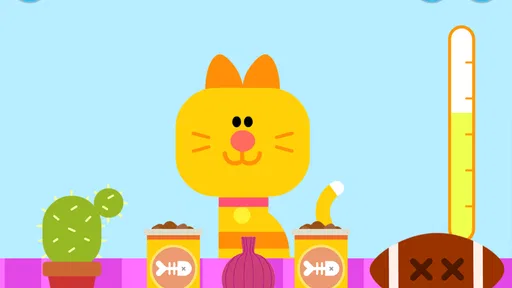
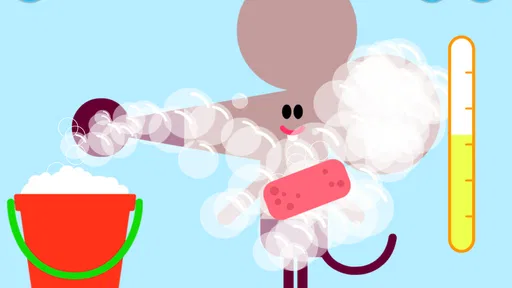
Our Review of Hey Duggee: We Love Animals
 Analysis by Appyee
Hey Duggee: We Love Animals is a small educational game built around a simple idea: children learn about caring for animals by taking part in activities alongside Duggee and the Squirrels. I found its strongest quality in the way it turns a familiar preschool theme into a gentle invitation to notice, help and make choices, rather than presenting learning as a formal lesson.
That focus makes it different from a typical entertainment game. There is no need to chase a high score or master complicated controls. Instead, the experience is aimed at young children who are still developing confidence with touchscreens and beginning to understand that animals need attention and care. BBC Studios Distribution Ltd. keeps the presentation approachable, and the Everyone age rating reflects that broad, child-friendly positioning.
The game sits in the educational section, but I would describe it more specifically as a guided preschool activity experience. It is best understood as something a parent can open for a short, purposeful play session, not as a complete animal-care simulation or a replacement for books, outdoor observation and real responsibility.
Learning care through one clear capability
The central capability is the game’s use of animal care as a learning framework. That matters because children are not simply asked to identify animals or repeat facts. They are encouraged to think about what looking after an animal involves. Even when the actions are presented in a playful way, the underlying message is practical: living creatures depend on people to notice their needs and respond appropriately.
In my experience, this works particularly well for children who learn more readily through imitation than explanation. A parent can say, “What do you think the animal needs now?” and let the child explore before offering help. That small pause turns a tap into a conversation. The child is not only following instructions; they are starting to connect an action with a consequence.
The useful part is the connection between play and responsibility. Many early-learning games are good at teaching matching, counting or recognition, but this one has a more social and emotional purpose. It gives parents an easy opening to talk about kindness, patience and observation without making the discussion feel like a lecture.
That does not mean the game offers a deep lesson in biology. I would not use it to teach detailed animal classification, habitats or veterinary knowledge. Its value is earlier and more accessible: it helps a young player practise the idea that care involves paying attention and doing something helpful.
The familiar Hey Duggee setting also has a practical effect. Children who already know the characters may approach the activities with less hesitation than they would show toward an unfamiliar educational app. Duggee and the Squirrels provide a reassuring context, while the animal theme gives the session a clear purpose. For a child who is easily overwhelmed by busy games, that familiarity can make the first few minutes much easier.
What the experience feels like for a young player
The design is most suitable for children who can understand a simple visual prompt and use basic touch controls. I would expect a preschooler to need some initial guidance, especially if they are not used to navigating games independently. Once the child understands the pattern of looking, choosing and responding, the activities become easier to approach without constant adult intervention.
That gradual handover is one of the better ways to use the game. I would begin by sitting beside the child and asking them to explain what they are doing. After a few rounds, I would step back and see whether they can make sense of the situation on their own. This reveals whether the game is supporting understanding or whether the child is simply tapping until something changes.
For very young children, the adult’s role remains important. The screen can show an action, but it cannot replace the real-world explanation that animals are not toys and that care requires consistency. I found the game more valuable when treated as a prompt for conversation rather than as a self-contained lesson.
How it works in everyday use
The practical appeal is its low barrier to entry. A child does not need to learn a complicated control scheme before reaching the meaningful part of the activity. That is useful when you have only a short period available, such as after breakfast, while waiting for an appointment or during a quiet break before bedtime.
A realistic session might begin with a parent opening the game and asking the child to look closely at the animal-care situation. Instead of immediately telling the child which option to choose, the parent can ask what they notice. If the child chooses successfully, the adult can reinforce the reasoning: “You saw what was needed.” If the child chooses incorrectly, the moment can become a gentle discussion rather than a correction.
This is also where the game’s simplicity becomes a strength. There are fewer distractions competing for attention, so it is easier to keep the conversation on the animal and its needs. In a more elaborate game, a child might focus on collecting rewards, unlocking content or racing through levels. Here, the adult can keep returning to the central question: what does caring mean in this situation?
One useful routine is to play first and talk afterward. I would let the child complete an activity without interrupting every decision, then ask them to describe what happened. This helps reveal whether they understood the sequence or merely copied the visible cues. It also encourages language development, because the child has to put the experience into their own words.
Another good approach is to connect the digital activity with something outside the app. After playing, a parent might ask the child how a family pet is cared for, what wild animals need in a garden, or why people should observe animals without disturbing them. The game cannot provide that whole bridge by itself, but it gives the conversation an easy starting point.
I would avoid using it as a background distraction. If the child is left to tap through while adults are busy, the educational value becomes much thinner. The game is not poorly designed for independent play, but its most distinctive benefit comes from the questions and explanations that happen around it.
Small habits that improve the session
First, keep the objective narrow. Rather than trying to cover every activity in one sitting, choose a short session and focus on the care idea being presented. Young children often gain more from repeating one concept in conversation than from moving quickly through everything available.
Second, let the child make the first decision. It can be tempting to guide the hand toward the correct choice, especially when the child is taking time. Waiting a little longer gives the game a chance to test observation and gives the child ownership of the result.
Third, use the game to practise vocabulary. Words such as “notice,” “help,” “gentle,” “needs” and “safe” fit naturally with the animal-care theme. This is an understated advantage: the activity can support communication as well as screen-based problem solving when an adult takes time to name what is happening.
Finally, stop while the child is still engaged. A short, positive session is more useful than stretching play until the child becomes restless. Because the game has a focused theme, it works well as a repeatable activity rather than something that needs to fill a long afternoon.
The best setting for this game
The strongest scenario is a shared parent-and-child session with a preschooler who enjoys Hey Duggee and is beginning to understand everyday responsibility. The parent does not need specialist knowledge or a prepared lesson. A few simple questions are enough to turn the game into a discussion about noticing needs and choosing kind actions.
It can also work well in a classroom or childcare setting when an adult wants a short digital prompt before an offline activity. For example, a teacher might use the game to introduce a conversation about caring for classroom creatures, visiting a farm or observing animals outdoors. The screen portion should remain the starting point, with the real learning continuing through talk, drawing, role-play or observation.
I would be more cautious about recommending it for an older child who already wants complex challenges. The game’s appeal is its clarity and gentle pace, so a child looking for strategy, open exploration or detailed factual content may lose interest quickly. It is also not the right choice for someone seeking a realistic simulation of feeding, cleaning, training or managing animals over time.
Families should also consider the child’s relationship with the characters. A fan of Duggee may engage immediately, while a child unfamiliar with the show may need a little context before the setting feels meaningful. The animal-care theme remains understandable, but the emotional pull of the presentation will naturally be stronger for children who already recognise the world.
Because the game costs $2.99, I see it as a focused purchase rather than an app to install casually and forget. The price is easier to justify when the family will use it as a conversation tool and return to the theme in real life. If the goal is simply to occupy a child with unlimited variety, a broader free or subscription-based children’s service may offer more content for that particular purpose, though it may be less focused.
Where the trade-offs become clear
The main trade-off is depth versus accessibility. The game is approachable because it keeps the animal-care idea simple, but that same simplicity limits how far the learning can go. Children may understand that animals need help without learning much about why needs differ between species or environments.
That is not a flaw for its intended age group, but it is important to set expectations. I would use it to introduce a subject, not to measure a child’s knowledge or build a complete curriculum. Books, nature walks and supervised contact with real animals provide richer opportunities for questions that the game cannot answer.
Another limitation is that the educational outcome depends heavily on how the child plays. A child who taps quickly may finish an activity without thinking about the reason behind the action. An adult who pauses to ask questions can draw out considerably more value. In other words, the game supplies a useful structure, but it does not guarantee reflection.
The short-session format can also be a mixed blessing. It makes the game manageable for preschool attention spans, yet children who want a long adventure may feel that it ends too soon or lacks enough variety. I would see that as a sign to pair it with another activity, not necessarily as a reason to reject it.
Compared with ordinary animal videos, the game has the advantage of asking the child to participate. Watching a video can introduce animals and show behaviour, but it usually does not give the child a decision to make. Compared with puzzle-focused educational games, this title offers less emphasis on formal skills such as counting or spelling, but more room for conversations about empathy and responsibility.
Compared with a real pet-care task, it is safer and easier to control, but far less demanding. A digital activity cannot teach the patience involved in daily care, the need to follow routines or the importance of treating an animal’s boundaries seriously. I would never present it as preparation for owning a pet on its own. Its role is to open the subject in a way that feels accessible to a young child.
Technical and practical expectations
The game was released on November 24, 2016, and its current version is 1.5.2. It requires Android 5.1 or later, so families using a very old device should check compatibility before planning around it. On a suitable phone or tablet, the more important practical question is whether the screen is large enough for a child to see the visual cues comfortably and tap without frustration.
I prefer a tablet for this kind of activity because a young child can hold it more securely and view the characters more easily. A phone can be convenient for travel, but the smaller display may make shared play less comfortable, especially when an adult is trying to observe the child’s choices at the same time.
The game has an average rating of 4.1 from 57 ratings, with 2 written reviews shown in its listing. I would treat that as a modest sign of approval rather than decisive proof that it will suit every family. The install figure is over 10,000, which suggests a small but established audience, while the more useful decision factor here is whether you specifically want this gentle animal-care focus.
It is also worth remembering that a child’s enjoyment may change after the first few sessions. Familiarity can make the activities feel comfortable, but it can also reduce the challenge once the child understands the pattern. I would keep it available as a conversation starter and rotate it with offline activities instead of expecting it to remain the child’s main game for months.
Who gains the most from the experience
I recommend it most to parents of preschool children who enjoy character-led learning and need a calm way to introduce animal responsibility. It is especially useful when the adult wants an activity that can be completed in a short sitting and then extended through questions, drawing or real-world observation.
It may also suit grandparents, babysitters and early-years educators who want a familiar, low-pressure activity that does not require complicated instructions. The adult can join in without taking over, and the animal theme provides plenty of natural prompts for language and emotional learning.
I would skip it if you are looking for advanced animal facts, a long-form game, competitive play or a detailed simulation. I would also choose a different educational app if your immediate goal is practising numbers, letters or structured puzzles. Those alternatives may deliver clearer progress in those specific skills, while this game’s strongest contribution is helping a child think about care.
For families deciding whether the purchase is worthwhile, my advice is to imagine the first session beyond the screen. If you can see yourself asking what an animal needs, connecting the activity with a pet or nature experience, and allowing the child time to explain their choices, the game has a clear place in your routine. If you need a self-running distraction with a large amount of content, it is probably not the best match.
After using it, my view is that the title succeeds because it does not overcomplicate its central message. Hey Duggee: We Love Animals is a gentle educational game about noticing and responding to animal needs, and its real strength appears when an adult turns each activity into a small conversation. It is not broad, deep or endlessly replayable, but it is focused, approachable and easy to connect with everyday lessons about kindness and responsibility.
For the right child, that focus is enough. I would recommend it as a short shared activity, particularly for a young Hey Duggee fan, while keeping expectations realistic about its depth and replay value. Used alongside real-world experiences rather than instead of them, it offers a friendly first step toward understanding that caring for animals means paying attention, acting gently and following through.
Verdict
Strengths of Hey Duggee: We Love Animals
- Simple controls make it easy for young children to play independently.
- Animal facts introduce basic vocabulary and encourage curiosity about nature.
- Bright visuals and familiar characters create an inviting preschool experience.
- Short activities suit quick play sessions and limited attention spans.
- Offline play is useful for travel or areas without a reliable connection.
Limitations of Hey Duggee: We Love Animals
- The gameplay may feel repetitive for older children after several sessions.
- Limited challenge means there is little appeal for advanced young players.
- Some activities offer minimal replay value once completed.
- The app requires substantial storage compared with its simple activities.
- Parents should check device compatibility before downloading on older hardware.
Other Releases by BBC Studios Distribution Ltd.
View All
BBC: World News & Stories
News & Magazines3.1

Hey Duggee: The Big Badge App
Educational3.7
Similar Picks in This Category
View All
Little Panda Policeman
BabyBus4.0

Monster Trucks Game for Kids 2
Raz Games4.1

Little Panda's Chinese Recipes
BabyBus4.4

Little Panda's Restaurant
BabyBus4.4

Little Panda's Ice Cream Games
BabyBus4.3

Baby Panda Care
BabyBus3.8
Frequently Asked Questions
What is Hey Duggee: We Love Animals?
Hey Duggee: We Love Animals is a child-friendly educational game inspired by the popular Hey Duggee animated series. It introduces young players to different animals through simple activities, colorful scenes, and familiar characters. The experience is designed for preschool children, combining playful interaction with basic learning about animal names, sounds, habitats, and care in an accessible format.
Is Hey Duggee: We Love Animals suitable for young children?
The game is primarily aimed at preschool-aged children, especially fans of Hey Duggee who enjoy short, easy-to-understand activities. Its controls are generally simple and designed for independent exploration, although younger children may still benefit from an adult explaining what they see. Parents should check the store’s current age rating and device requirements before downloading.
Does the game require an internet connection to play?
Many children’s apps can be used offline after installation, which is convenient for travel or limiting online access, but availability may depend on the version and platform. We recommend checking the official Google Play or App Store listing for the latest offline-play information. Downloading updates, restoring purchases, or accessing any optional online content may still require internet connectivity.
Are there advertisements or in-app purchases in Hey Duggee: We Love Animals?
Parents should review the current store description carefully because monetization details can vary between Android and iOS releases, regions, or updated editions. A child-focused game may be offered as a paid download or may include optional purchases, while some versions could be designed without advertising. Before installation, verify whether ads, subscriptions, or in-app purchases are listed.
What can children learn while playing Hey Duggee: We Love Animals?
The game offers learning through interaction rather than formal lessons. Children can become familiar with animal-related vocabulary, recognize different creatures, listen to sounds, and practice observation, matching, and simple problem-solving. The activities are best viewed as supplementary play: they can encourage curiosity and conversation about animals, but they should complement real-world books, outdoor exploration, and adult-guided learning.
Play our best games!


